
Understanding Water Costs in Office and Commercial Properties
From washrooms to landscaping, water expenses can accumulate quickly, and many properties are being over-billed.
Commercial properties across the United States often treat water bills as routine overhead costs, something budgeted but rarely analyzed. Property managers and building owners typically don’t scrutinize water costs with the same intensity as they do for electricity or natural gas. This is partly because water bills are generally perceived as smaller expenses, and partly because there are few effective strategies to reduce them.
The Smart Valve™ can change this. Installed in over 20,000 commercial facilities across North America, this innovative technology consistently delivers a 15–35% reduction in metered water consumption. What’s more, it requires no upfront costs and disrupts neither building tenants nor daily operations.
Warehouses
Although warehouses may seem to use little water, activities such as loading docks, washrooms, dust suppression, and facility cleaning reveal a different reality.
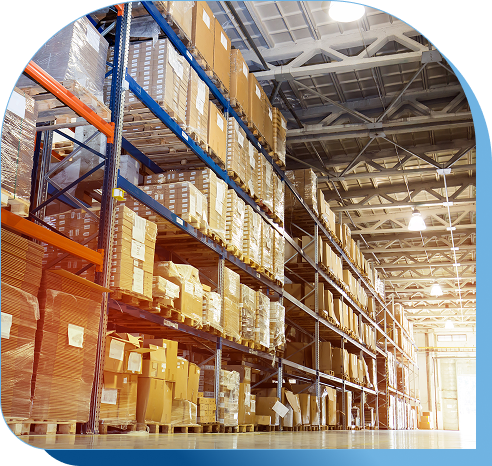
Large warehouses and distribution centers consume water in various ways that are often underestimated when considered individually. For example, washrooms serving large teams can account for significant daily water consumption. Loading dock areas also require regular cleaning, which adds to the overall usage. Some warehouses utilize dust suppression systems and climate control, as well as fire suppression systems, which draw water from the facility’s supply.
Because water use in warehouses is spread throughout the facility, rather than concentrated in a single system, the Smart Valve™ is an ideal solution. Installed at the point where water enters the building, it effectively reduces water consumption across all downstream applications simultaneously, without the need to target or retrofit individual fixtures. Implementing the Smart Valve™ can reduce metered water use by 15–35% across a large warehouse. This reduction can result in significant cost savings, especially for owner-occupied facilities where utility expenses are directly incurred by the business. A free site assessment is available to confirm compatibility and provide a savings projection at no cost or obligation.
Self Storage Facilities
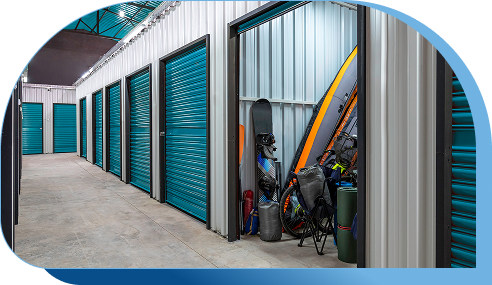
Self-storage operations may require minimal staffing, but they aren't low in water usage. The key factors, like building maintenance, climate control, and washroom facilities, contribute to consistent water consumption.
Since self-storage facilities typically operate with small on-site teams, the water consumption per employee is relatively high compared to other commercial properties. This means that correcting meter over-reading can significantly improve efficiency. The Smart Valve™ addresses this issue without requiring any changes to staffing or operations.
With no upfront costs and a guarantee that savings will meet or exceed 15%, the Smart Valve™ program represents one of the simplest operational improvements available to self-storage operators. Installation occurs in just one visit and requires no alterations to the facility’s infrastructure or tenant services.
Office Buildings
Office buildings serve dozens to hundreds of people daily, and each individual uses the building's water.

Office buildings serve dozens to hundreds of people daily, and each individual uses the building’s water. Commercial office buildings create water demand through washrooms, break rooms, kitchenettes, HVAC systems, cooling systems, and general building maintenance. In multi-tenanted buildings, property managers pay for the water used in common areas, while the usage in individual suites may or may not be separately sub-metered. Regardless, the building’s main meter often records more volume than is actually consumed, leading the property to pay for excess water.
The Smart Valve™ is installed at the point where water enters the building and effectively reduces over-reading across all downstream uses. This installation causes no disruption to tenants, requires no modifications to fixtures or systems within individual suites, and does not affect water pressure or service quality throughout the building.
For property managers aiming to reduce operating costs while demonstrating environmental responsibility to tenants, the Smart Valve™ program offers a clear and well-documented solution. Savings are validated through before-and-after consumption data, and the annual inspection program guarantees ongoing optimal performance at no additional cost.
Funeral Homes
Funeral homes are not typically recognized as significant commercial water users, yet they have steady water consumption due to preparation facilities, washrooms, and landscaping needs.
Funeral homes and memorial centers operate facilities that require constant maintenance and high standards of presentation. Preparation and embalming rooms utilize water as part of standard procedures. Public washrooms in visitation areas must be professionally maintained throughout the day. Additionally, landscaped grounds and memorial gardens need regular care. In facilities that offer on-site catering or reception spaces, water usage in kitchens adds another layer to overall consumption. As funeral homes serve families during deeply sensitive times, the reliability and quality of all building systems must be beyond reproach. The Smart Valve™ is designed to operate quietly and dependably. It is installed in the mechanical room, ensuring that it does not interfere with any customer-facing systems. This means that presentation, water pressure, and service quality remain completely unaffected.
With a guarantee of 15% to 35% savings and no upfront costs, this program allows funeral home operators to reduce recurring overhead expenses without making any operational changes or experiencing service interruptions. Annual inspections are conducted at American Water Savings’ expense and do not disrupt the facility’s daily operations.

See If Your Property
Qualifies for 15%–35% Water Savings
If your facility has high water usage, a water bill review is the first step in determining whether system-level optimization is appropriate.
There is no obligation beyond the review. The objective is straightforward: identify whether meaningful, measurable water savings can be achieved for your property.
Qualified businesses must spend over $4,000 USD per month on average on water and sewage.